

A Cambodian Story: Pung Kheav Se’s 35-Year Business Journey
The recently inaugurated Morodok Techo Interchange marks another milestone in Phnom Penh’s growing infrastructure network. Built by OCIC, the project reflects the group’s ongoing support for Cambodia’s urban development.

The recently inaugurated Morodok Techo Interchange marks another milestone in Phnom Penh’s growing infrastructure network. Built by OCIC, the project reflects the group’s ongoing support for Cambodia’s urban development. Its founder, Lok Neak Oknha Dr. Pung Kheav Se, is one of the country’s most active investors, whose business journey over the past decades reflects a consistent focus on building for the future.
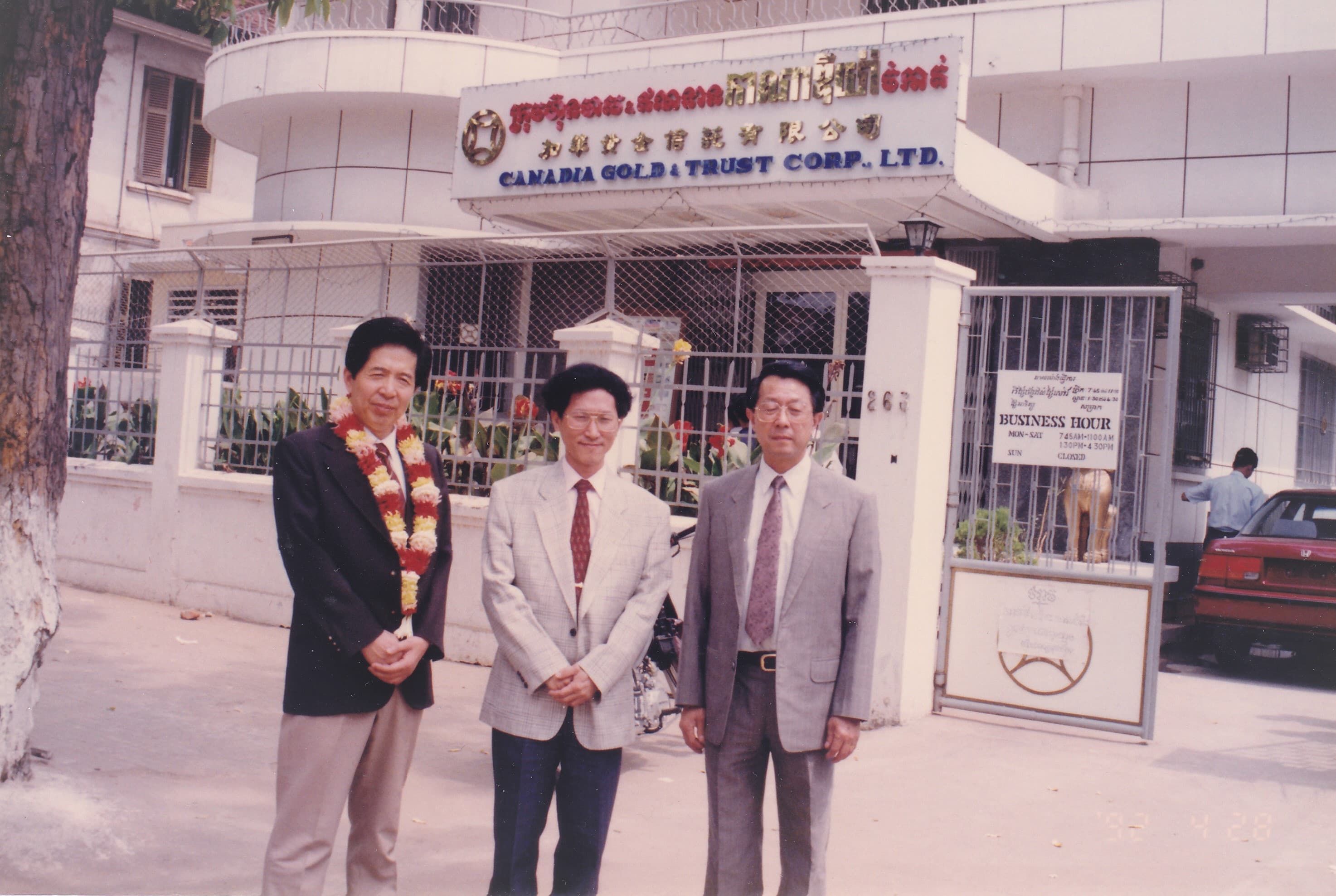
Coming back from Canada in 1990, the Cambodian entrepreneur returned with the ambition to contribute to his country’s recovery and growth. His first venture, the Canadia Gold & Trust Corporation in 1991, laid the foundation for Canadia Bank in 1993—marking the beginning of a journey built through years of hard work, navigating both opportunities and challenges along the way.
Building Impact for Cambodians

Canadia Bank introduced modern banking services at a time when Cambodia was reconnecting with international markets. It played a meaningful role in enabling cross-border transactions, supporting trade, attracting foreign investment and international partnerships—including with institutions like the International Finance Corporation (IFC). Through the years, the bank remained resilient through two global economic crises, continuing to serve individuals, businesses, and the broader economy. Today, Canadia Bank is the country’s largest locally owned bank, with assets exceeding USD 7 billion.
In 2000, Pung launched OCIC with the aim of encouraging overseas Cambodians to return, invest, and contribute to their home country. Soon after, OCIC quickly expanded into real estate, infrastructure, and large-scale urban planning—focusing on projects that could unlock long-term economic opportunities.
“We see investment as a way to build infrastructure, enable development, and create opportunities for future growth,” – Lok Neak Oknha Dr. Pung Kheav Se.
Urban Development at Scale
Over the years, OCIC has delivered some of Phnom Penh’s most recognizable developments—including Canadia Tower, Cambodia’s first skyscraper; Sorya Center Point, one of its first modern malls; and large-scale districts such as Koh Pich, Olympia City, Norea City, and Chroy Changvar Satellite City. These mixed-use areas bring together residential, commercial, and public spaces to support a more connected and accessible capital city.

To support this urban growth, OCIC has built critical transport and urban mobility links, including the Koh Norea and Russey Keo bridges and a growing network of elevated roads and flyovers—helping ease traffic and improve access across the capital.
In addition to infrastructure, OCIC has also developed major industrial zones that drive local production and employment. Among the first was a 30-hectare industrial park established in 1997 in Phnom Penh, which supported both local and international investors—particularly in the garment manufacturing sector. Two decades later, in 2018, OCIC launched a second industrial park in Kampong Speu, more than ten times larger at 500 hectares. These zones play a key role in supporting manufacturing, logistics, and Cambodia’s broader economic diversification.
Looking ahead, OCIC is leading the development of the Techo International Airport (KTI), one of Cambodia’s largest infrastructure projects. Its design, from renowned British architecture firm Foster + Partners, was highlighted by CNN as one of 2025’s architectural landmarks. The airport, is set to strengthen regional connectivity and support Cambodia’s ambitions as a rising economic hub.
Investing in Human Development
Parallel to its physical developments, OCIC is also investing in Cambodia’s human capital. Intercare Hospital was launched to improve access to healthcare in Phnom Penh with international expertise, and recently entered a partnership with leading Thai hospital Bumrungrad to provide medical collaboration and offer Cambodian patients access locally to leading specialists in areas including urology, cardiology, and other advanced medical disciplines.

Education is also a key investment for OCIC. CamTech University—part of the group’s education force—was established to support the country’s emerging talent, with a focus on science, technology, and innovation. As part of this commitment, the university recently signed a partnership with WCC-ATC, a leading aviation academy from the Philippines, to train and develop young Cambodian talent in the aviation sector. The program supports Cambodia’s ambitions in technical education and regional competitiveness. By equipping students with practical skills—from aircraft mechanics to engineering—it aims to increase local employment opportunities and reduce reliance on foreign expertise. CamTech also engages in collaborative programs with organizations such as UNESCAP, Khmer Enterprise, Impact Hub, and Smart Axiata—further expanding its ecosystem of innovation and entrepreneurship.
Through these efforts and across his companies and projects, Pung has created over 20,000 jobs within Canadia Group, and tens of thousands more indirectly—contributing not only to economic growth, but also to the development of skills and career pathways for Cambodians across multiple sectors.
Over the past 35 years, Pung has built one of Cambodia’s largest business groups—Canadia Group—spanning Banking, Insurance, Real Estate, Hotels, Schools, Hospitals, Exhibition and Exposition Centers, Shopping-Malls, Night Markets, and more. His approach remains consistent: focus on long-term value, reinvest locally, and help lay the groundwork for a more connected Cambodia, creating a platform for future generations to build and innovate.


